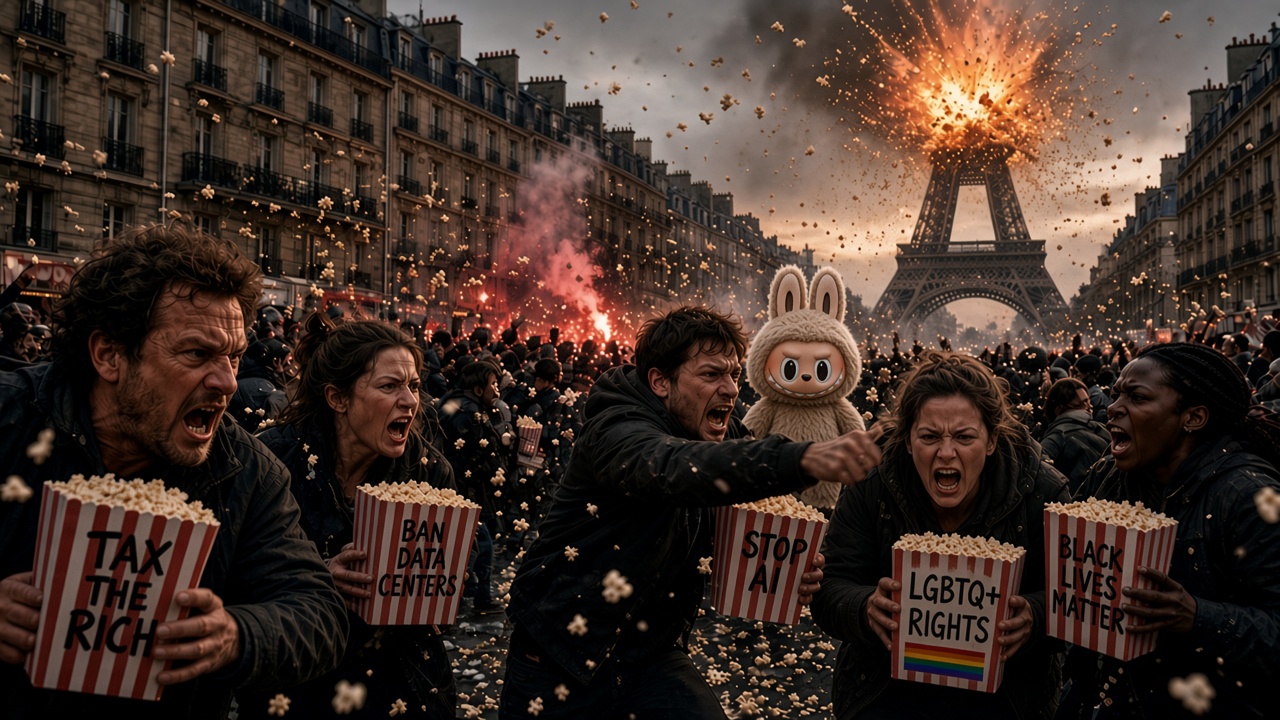
Human-made is the new luxury
When something becomes cheap, fast and available to everyone, the thing it replaces doesn’t disappear. It becomes premium.
I meet a lot of people these days, and I listen to a lot of conversations about AI. Podcasts like Steven Bartlett’s spend episode after episode on how AI is coming for our jobs. CEOs, founders and experts repeat the same message: be careful, be worried, be afraid.
I understand where that fear comes from. But I don’t share it. And I don’t think you should be afraid either.
What AI actually did for my team
Let me start with my own experience.
Since my team and I started using AI seriously, we launch three to four times more products than before. We ship projects faster. We learn new skills in days instead of months. We feel able to build things and to partner with people we couldn’t have reached before.
Yes, the team is smaller. But we work at double the speed. And here’s the part nobody talks about: we have more time for what we like to call work-life balance. More time to live.
AI also opened a window for us to build things for ourselves, side projects and ideas we always wanted to try, on a budget of a few dollars. A few months ago, almost none of this was possible.
Anyone can build now
Think about what that means outside of a company.
Any kid with an idea, the will to make it happen and $19 a month can launch an app, a game, a platform, anything, and start earning money from it.
Someone close to me had been out of work for years. With AI, they were able to build a website and launch a service. More than a business, it gave them something they had lost: hope.
Technology has always been scary. The printing press, electricity, the internet, the smartphone: every one of them frightened people at some point. Everything in life becomes scary at some point. Then we adapt, and we build.
Smaller teams, more makers, and a hidden opportunity
So, are teams getting smaller? Yes.
Can anyone ship a product now? Yes. Although, to be honest, not everyone should.
Today, most of our products, apps, design and user experience are already made with AI. That’s the reality, and it will only grow. But the real opportunity is hiding somewhere else, especially for people who don’t want to embrace AI.
That opportunity is the human being.
The human mind is the next luxury
When something becomes cheap, fast and available to everyone, the thing it replaces doesn’t disappear. It becomes premium.
An AI chatbot acting as a psychologist might cost you $8 a month. A real human psychologist will cost you ten times more. And people will want that. People will need that. It will become the upper level of service.
Take a coffee shop. You can drink a coffee prepared by AI or a robot: fast, consistent, cheap. Or you can pay more to watch, see, taste and feel a coffee made by a human, the person behind the counter who knows your name and pours it with care.
Both options will exist. Most people will choose the cheapest, quickest and easiest option most of the time, and that’s fine. But a large and growing group will choose, and pay for, the human-made experience.
This isn’t just my intuition. In a 2025 Baringa survey of more than 5,000 consumers across five countries, almost three times as many people said they would prefer the work of a human photographer (64%) to a cheaper but equally beautiful AI-generated image (22%). People pay for the human behind the work, not only for the result.
Look at Apple. They sell advanced technology, but for their Mac mini ad they used clay and stop-motion. And they showed us how people made it. The human work became part of the value.
This is exactly my point. AI gives us options. You can choose something generated by AI, or something created by human hands. Both can exist. But knowing someone spent time making it will mean something. Human-made becomes a reason to choose.
Every industry will get a “human-made” tier
This won’t stop at coffee and therapy. Every category will split in two, from dog walkers to doctors, accountants and lawyers.
Nothing is going away. The format is changing, and the reshaping is coming.
Many people will prefer no human contact at all, and that’s a valid choice. But we are heading toward a moment where human service will feel like craft, like something artisanal:
- A real doctor who looks you in the eye.
- A real psychologist who has lived a life.
- A real lawyer who fights for you.
- A bank where you can walk in and sit down with someone.
- A massage therapist whose hands you can actually feel.
- A dress where you can see that the artist spent weeks creating it.
- Fruit harvested by the hands of an old farmer.
- An animated film drawn and made by humans.
We already pay more for “handmade” today. According to IMARC Group, the global handicrafts market reached about $987 billion in 2025 and is projected to pass $2 trillion by 2034, driven by demand for unique, handmade products. Now imagine that same premium applied not only to objects, but to services, care, advice and experiences.
The money will follow the human
Here’s the part I find most exciting. As AI handles the cheap, fast and repetitive work, human work moves up the value chain. The people who offer real presence, real craft and real attention will be able to charge more, not less. Many will earn a better income because of it.
So my message is simple: don’t fear AI. Use it to build, to move faster and to buy back your time. And at the same time, protect, develop and invest in what makes you human, because that is exactly what the market will pay a premium for.
Human-made is the next label
We have “organic.” We have “fair trade.” We have “handmade.”
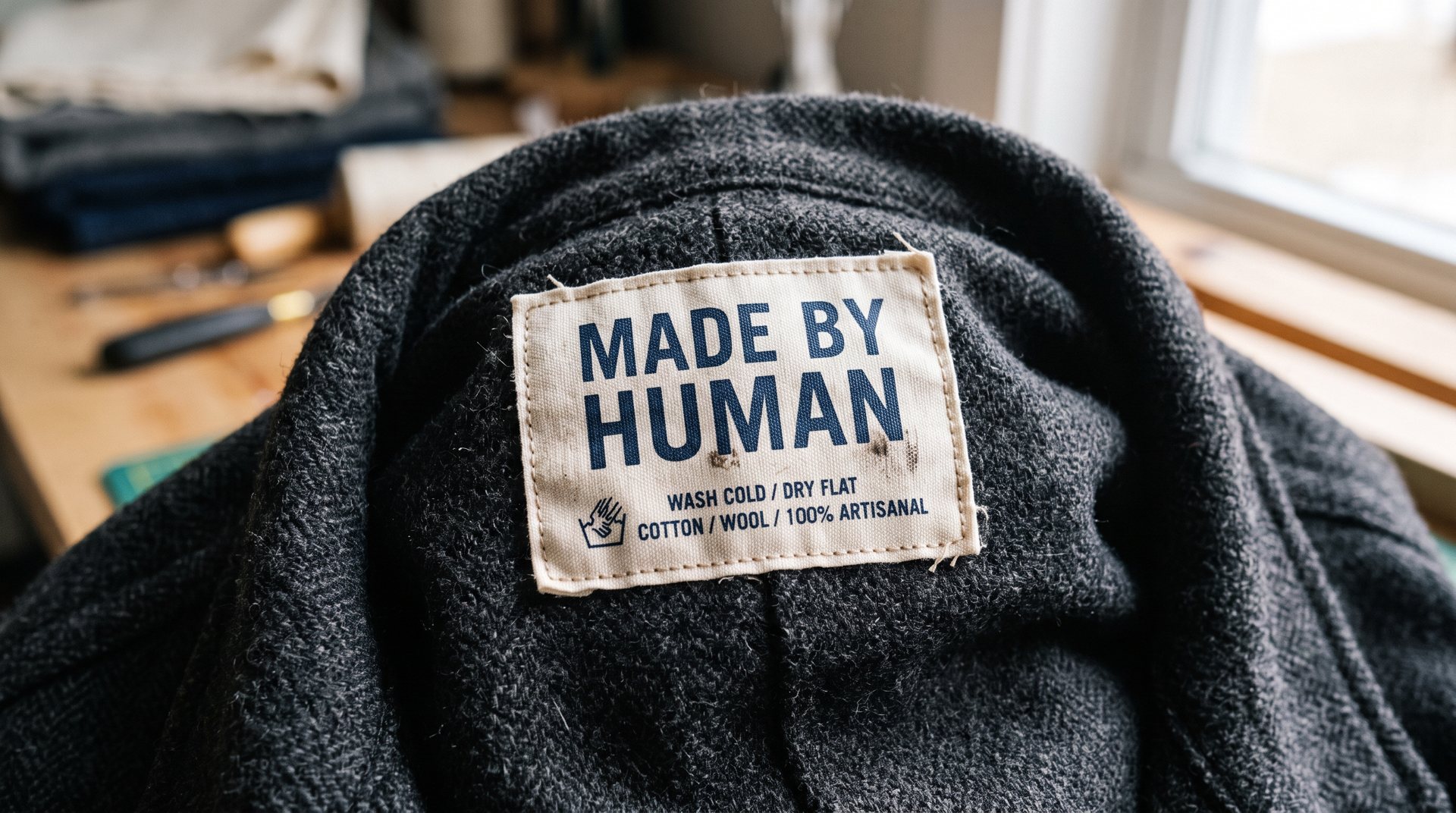
The next one is “Human made.”
It’s the next level, the next trend, the next experience. And I believe it will be a label worth trillions of dollars.
Sources
Baringa, “Truth: people value other people most” (2025 consumer survey). baringa.com ↗
Survey details, via Variety. variety.com ↗
IMARC Group, Handicrafts Market Report 2026–2034, via Research and Markets. researchandmarkets.com ↗